
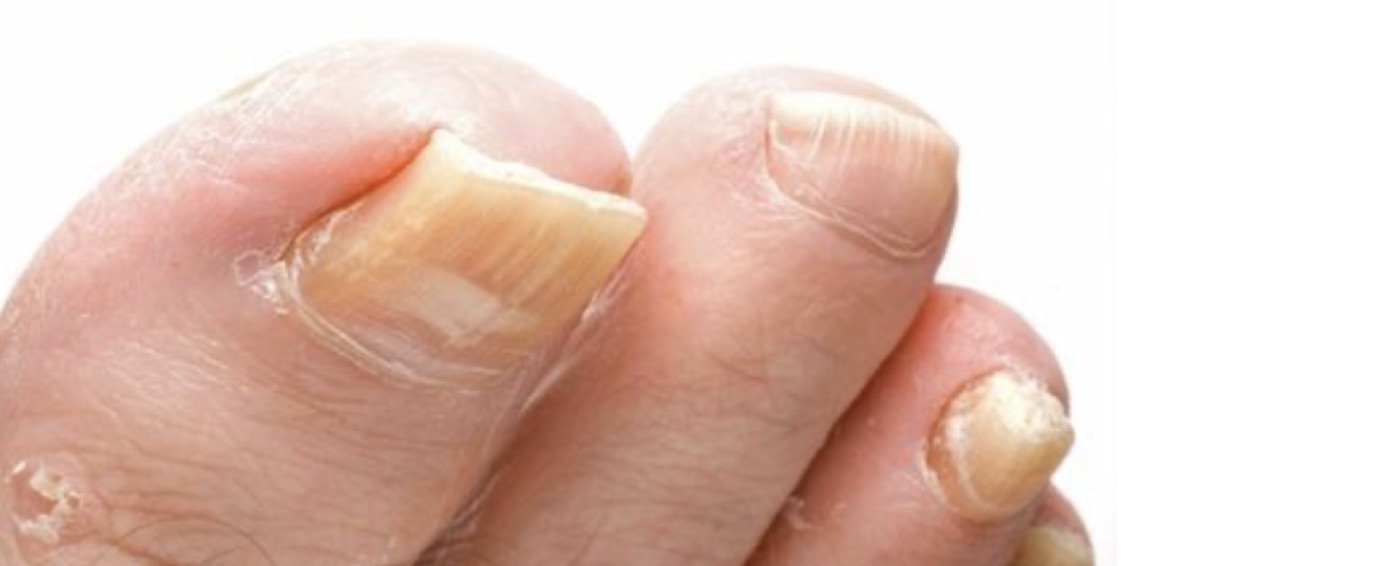
Thickened toenails are one of the most common changes we see in foot health practice. You may notice that a nail has become harder to cut, more curved, yellow or discoloured, or simply much thicker than it used to be.
It is very easy to assume that a thickened toenail must be a fungal infection. Sometimes it is — but there are several other reasons why toenails can change.
Understanding what may be causing the problem is important because the right treatment depends on the underlying cause.
Why do toenails become thicker?
Our toenails grow from an area beneath the skin called the nail matrix. As the nail grows forward, many different factors can influence its thickness, shape and appearance.
1. Ageing
Toenails naturally tend to change as we get older.
Growth can become slower, and nails may become thicker, harder and more difficult to cut. Years of everyday pressure from footwear and activity can also contribute to these changes.
A thickened nail in an older adult therefore isn't automatically a sign of disease or infection.
2. Repeated pressure or trauma
One of the most overlooked causes of thickened toenails is repeated trauma.
This doesn't necessarily mean dropping something heavy on your toe. Small amounts of pressure occurring repeatedly over many years can affect the nail.
Shoes that are too short or shallow, toes repeatedly contacting the end or top of a shoe, long-distance walking or running, and previous injuries can all affect how a nail grows.
Sometimes people don't remember ever injuring the toe.
Does a thick toenail mean I have a fungal infection?
No.
Fungal nail infection — known as onychomycosis — can certainly cause nails to become thickened, brittle, crumbly or discoloured.
However, several non-fungal nail conditions can look remarkably similar.
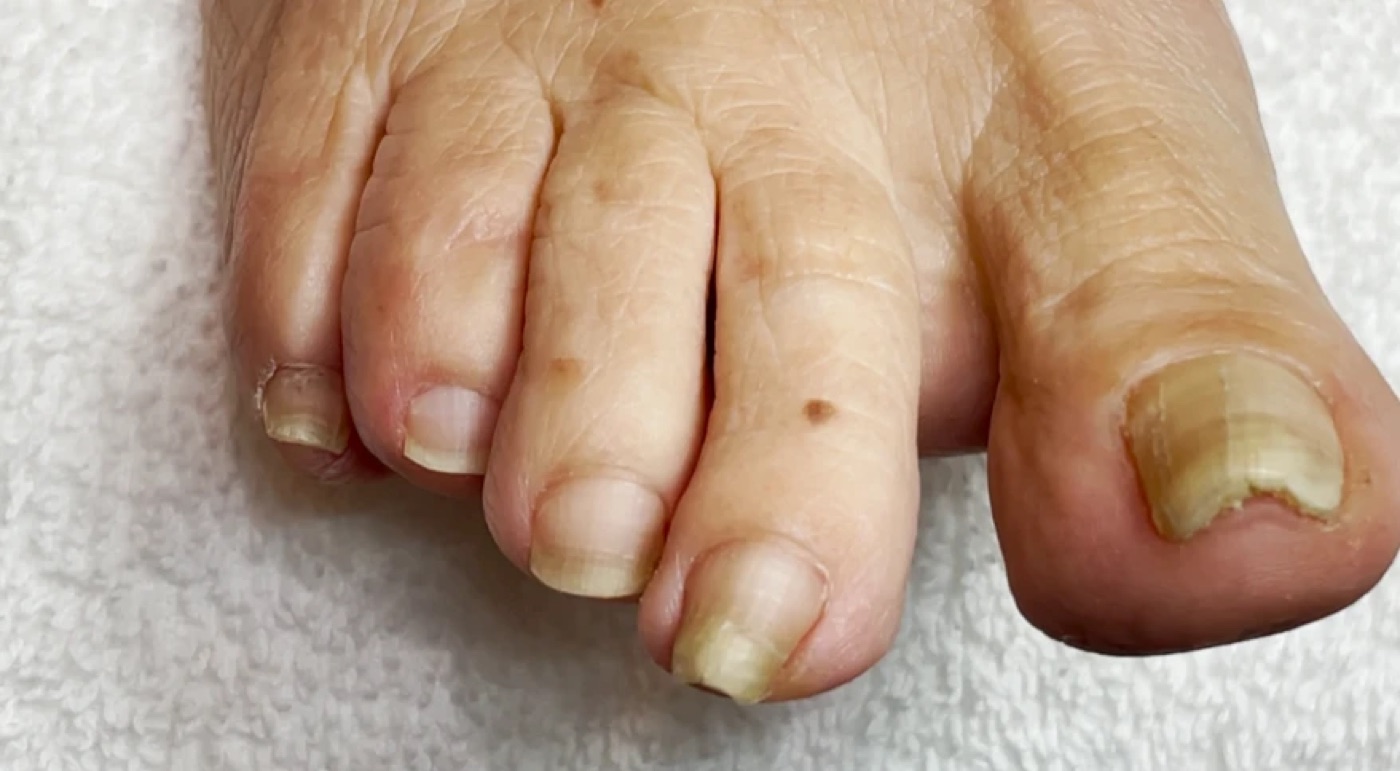
This matters because using an antifungal treatment on a nail that isn't fungal is unlikely to solve the problem.
If the diagnosis is uncertain, it may be appropriate to have the nail professionally assessed and, in some circumstances, fungal testing may be recommended before embarking on prolonged treatment.
Why are some thick nails so difficult to cut?
As a nail becomes thicker, ordinary nail clippers may struggle to cut through it.
The nail can also become more curved or distorted, making it difficult to reach safely. Poor eyesight, reduced flexibility, arthritis or difficulty reaching the feet can make home nail care even harder.
Trying to force standard clippers through a very thick nail can result in the nail splitting or injury to the surrounding skin.
Professional foot care can reduce the thickness and length of the nail using appropriate instruments and equipment, making the nail more comfortable and manageable.
Can footwear make thickened nails worse?
Yes.
If there isn't enough room around the toes, repeated pressure against the nail can contribute to discomfort and further trauma.
And shoe size alone doesn't tell us whether a shoe fits properly.
Width, depth, toe-box shape and the way the foot moves inside the shoe are all important.
If you repeatedly experience pressure around your toenails, it may be worth looking at your footwear as well as the nail itself.
What can I safely do at home?
If your nails are otherwise healthy and you can comfortably reach and see your feet, regular gentle nail care can help.
Avoid cutting nails excessively short or digging down into the corners. Wear shoes with sufficient length, width and depth for your toes, and keep an eye on any changes in colour, thickness, shape or surrounding skin.
If a nail is extremely thick, painful or difficult to manage, don't force it.
People with diabetes, poor circulation, reduced sensation or certain medical conditions should be particularly careful about attempting difficult foot care themselves and should seek appropriate professional advice.
When should I have a thickened toenail checked?
Consider having a nail professionally assessed if:
- it has changed significantly in colour, thickness or shape;
- it has become painful;
- there is redness, swelling, bleeding or discharge around it;
- it repeatedly catches or presses against footwear;
- you suspect a fungal infection;
- you cannot safely cut it yourself; or
- you have diabetes, poor circulation or reduced sensation and are concerned about a change in your feet.
Occasionally, changes to a nail can have causes that require assessment by another healthcare professional. If something doesn't look or behave as expected, it is better to have it checked than simply assume it is part of ageing.
Looking after your feet for the long term
Toenails may seem like a very small part of our health, but painful or difficult nails can affect footwear, walking and everyday comfort.
At Nidderdale Foot Care, we look beyond simply shortening a troublesome nail. Understanding why it has changed — and considering factors such as footwear, pressure and your wider health — can help us decide on the most appropriate approach.
Helping people move comfortably through life.
This article provides general information and is not intended to diagnose an individual foot or nail condition. If you are concerned about a change in your nails or feet, seek advice from an appropriately qualified healthcare or foot health professional.
Concerned about a nail or your feet?
Book an appointment and we'll assess it properly, explain what's going on, and help keep you comfortable.